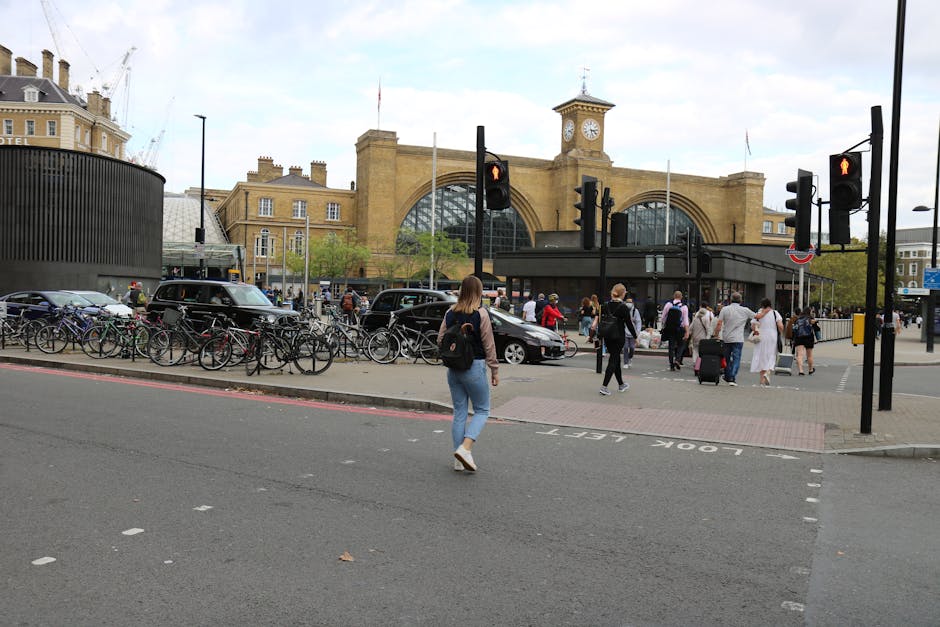
St Pancras (King's Cross) stall waste clearance tips
If you run a stall, market stand, pop-up counter, or compact trading space around St Pancras and King's Cross, waste builds up quickly. Cardboard stacks in corners, broken packaging under tables, end-of-day food scraps, damaged display items, and the odd awkward bulky bit can turn a tidy setup into a stress point before you know it. These St Pancras (King's Cross) stall waste clearance tips are written to help you clear clutter safely, work faster at close-down, and avoid the sort of mess that gets in the way of customers, staff, and stock.
The good news? You do not need a huge operation to stay on top of stall waste. With the right routine, a few sensible habits, and a clear plan for sorting, storage, and removal, even a small site can stay neat and efficient. Let's face it, a clean stall just feels better to work in too.
In this guide, you'll find practical steps, common mistakes, compliance pointers, and real-world ideas you can use straight away. If you're looking for broader support with business rubbish, business waste removal and waste removal services can also form part of a simpler, more reliable process.
Table of Contents
- Why St Pancras (King's Cross) stall waste clearance tips matters
- How stall waste clearance works
- Key benefits and practical advantages
- Who this is for and when it makes sense
- Step-by-step guidance
- Expert tips for better results
- Common mistakes to avoid
- Tools, resources and recommendations
- Law, compliance, standards, or best practice
- Options, methods, or comparison table
- Case study or real-world example
- Practical checklist
- Conclusion
- Frequently asked questions
Why St Pancras (King's Cross) stall waste clearance tips Matters
Stalls and small trading spaces do not have the luxury of extra room. One overfilled bin or a pile of collapsed boxes can block foot traffic, slow down service, and make the whole place feel cramped. In a busy area like St Pancras and King's Cross, that matters even more because people are moving fast, staff are often working in tight corners, and standards are visible at a glance.
Waste clearance is not just about tidiness. It affects safety, efficiency, presentation, and sometimes even what you can store on site overnight. If your stall handles packaging, broken-down displays, food waste, or mixed trading waste, the way you manage it can influence daily operations in a very real way.
There's also the simple reality of reputation. Customers notice a clean stall. They notice the smell of old packaging or the clutter behind the counter too, even if they don't say it out loud. To be fair, they usually decide within seconds whether a stall feels cared for.
For businesses that need regular support, it can help to look at the wider service picture too. A dedicated office clearance approach is not identical to stall clearance, of course, but the same principle applies: remove waste properly, keep useful items separate, and avoid letting rubbish dictate the workspace.
Expert takeaway: the best stall waste clearance system is not the fanciest one. It is the one your team will actually follow, every single day, even during a busy lunch rush.
How St Pancras (King's Cross) stall waste clearance tips Works
In practice, stall waste clearance works best as a simple routine rather than a once-a-week rescue job. You sort waste at source, clear it in stages, and use the right disposal route for each material. That sounds basic, but basic is often what works.
A typical process might look like this:
- Separate waste as it appears. Cardboard, food waste, broken fixtures, and reusable items should not all go in one heap.
- Compress and contain. Flatten packaging, bag loose waste, and keep sharp items boxed or wrapped.
- Store waste safely until collection. Don't let it block exits, walkways, or stock access.
- Remove regular waste on schedule. Small, frequent clearance usually beats large, messy clear-outs.
- Call for specialist help when needed. Bulky waste, mixed loads, or awkward items may need professional handling.
If your stall operation is connected to a shopfront, shared unit, or commercial premises, then a service such as business waste removal may be more appropriate than trying to manage everything in-house. Likewise, if old fixtures or damaged counters are involved, furniture disposal can be the cleaner route.
One practical thing people often miss: stall waste is rarely just one type of rubbish. It's usually a mix. That mix is what causes headaches. The box that held dry goods is harmless enough, but the wet crate beside it, the broken shelf, and the packaging tape tangled in everything else suddenly create a messy little knot. Sounds familiar? Exactly.
Key Benefits and Practical Advantages
Good waste clearance is one of those behind-the-scenes habits that pays off every day. You may not notice the benefit in a dramatic way, but you will notice fewer delays, fewer smells, and less stress at the end of a shift.
- Better presentation: a cleaner stall feels more trustworthy and professional.
- Faster close-down: when waste is sorted as you go, clearing up takes less time.
- Safer working conditions: fewer trip hazards, fewer sharp edges, and less overstacking.
- More usable space: small stalls need every inch they can get.
- Lower chance of contamination: particularly useful where food, drink, or packaging waste is present.
- Less stress for staff: people work better in a space that feels under control.
There's also a commercial side to this. A tidy stall tends to sell better because the display gets the attention, not the mess behind it. And if you're trading in a high-footfall area, that visual discipline matters. It quietly signals care.
If your stall setup involves reused displays, chairs, shelves, or temporary counters that have come to the end of their life, you may also find furniture clearance useful, especially when items are no longer fit for another round of use.
Who This Is For and When It Makes Sense
These tips are for anyone managing a stall-like trading space in or around St Pancras and King's Cross. That includes food traders, retail pop-ups, market stands, promotional counters, and compact commercial units where stock turnover creates regular waste.
It also makes sense for:
- stallholders who work long trading hours and need a quick daily clean-down
- small businesses that share space with neighbours or other vendors
- operators handling cardboard-heavy deliveries every day
- teams that store tools, packaging, or display materials behind the stall
- traders preparing for refurbishment, reset, or seasonal changeovers
If your waste is mainly household-type overflow from a mixed-use space, then home clearance or flat clearance may be more relevant than you first think. Not because the stall is a home, obviously, but because the load and handling needs can sometimes overlap in practical ways.
When does it make sense to bring in outside help? Usually when waste starts taking time away from trading, or when you've got bulky, heavy, or awkward items that are difficult to move safely. If you're regularly thinking, "We'll deal with that later," then later has probably already arrived.
Step-by-Step Guidance
A simple process works best. Here's a practical approach you can follow without overcomplicating it.
1. Start with a waste audit
Walk the stall at the end of a busy day and look at what's actually being thrown away. Is it mostly cardboard? Food leftovers? Wrapping? Broken fittings? Old signage? You can't improve what you haven't identified.
2. Set up waste stations that match the stall
Use containers that fit the space. A huge bin in a tiny stall can be just as awkward as no bin at all. Keep sacks, boxes, or tubs where waste naturally appears, not somewhere across the way that staff forget to use.
3. Flatten and separate
Flatten boxes immediately. Separate recyclable cardboard, clean plastic packaging, food waste, and bulky items. The more mixed the waste becomes, the more time it takes later. Small habit, big difference.
4. Clear high-risk waste first
Sharp packaging straps, broken glass, wet waste, and anything that smells should be removed quickly. You do not want that sitting around until the end of the week. Truth be told, nobody does.
5. Create an end-of-day close-down routine
This should be quick, consistent, and realistic. Sweep, bag, flatten, stack, remove. If you can repeat it without thinking too hard, it's probably the right routine.
6. Arrange regular collections or removals
If your stall generates more waste than a standard bin can handle, book predictable clearances rather than waiting for overflows. Regular services reduce panic and help keep the space manageable.
7. Review and refine monthly
Every few weeks, ask what is clogging the process. Maybe the bin is too far away. Maybe boxes arrive at the same time every morning and need a dedicated flattening point. Maybe there is a better spot for reuse storage. Small changes can improve the whole workflow.
If the process includes damaged stock, old storage units, or end-of-line display items, it may be useful to review furniture clearance alongside the regular waste routine. That way, useful items can be separated before they become waste by accident.
Expert Tips for Better Results
Here's where a little practical experience helps. Most stalls do not fail at waste clearance because they don't care. They fail because the system is too awkward to maintain during a rush.
- Keep a "clear now" box. Anything questionable goes there until the end-of-day review. It stops the stall from becoming a dumping ground.
- Train one person to be the final sweep lead. Clear responsibility beats vague "someone will do it" thinking every time.
- Use smaller bags more often. Overfilled sacks are harder to move and more likely to split.
- Plan for delivery day. That's when cardboard and packing waste spike. Prepare in advance.
- Protect the customer-facing side first. If time is tight, tidy the visible areas before the hidden corners. The eye-line matters.
- Keep reusable items separate. A shelf, crate, or display board that looks old may still have life left in it.
One slightly old-school but useful habit: put the rubbish out of sight before you put it out of mind. Sounds obvious, yet so many problems start because a bag was "only there for a minute" and then stayed for the rest of the day.
For stalls that also generate mixed commercial waste, waste removal can help you deal with loads that are too awkward for ordinary collection routines.
Common Mistakes to Avoid
The biggest mistakes are usually the simplest ones. The kind people make while busy, tired, or trying to save a few minutes.
- Mixing everything together. Recyclables, food waste, and bulky rubbish all in one pile becomes a disposal headache.
- Waiting too long to remove waste. Once the stall starts feeling crowded, it gets slower to clear.
- Blocking exits or access points. Even temporarily, this creates risk.
- Ignoring heavy or awkward items. A broken counter or stacked crate can turn into a lifting problem fast.
- Keeping waste "just in case". If it's clearly unusable, don't let it sit there for three weeks looking hopeful.
- Forgetting cleaning after clearance. Clearing waste is one job. Wiping, sweeping, and checking surfaces is another.
A less obvious mistake is underestimating how much waste comes from packaging alone. Stalls that receive daily stock deliveries often end up with more cardboard than they expect. By the time the pile is leaning at a slightly alarming angle, it's already overdue.
Tools, Resources and Recommendations
You do not need a huge toolkit, but a few basic items make stall waste management much smoother.
| Tool or resource | What it helps with | Why it matters |
|---|---|---|
| Heavy-duty sacks | Bagging mixed waste | Reduces splitting and spill risk |
| Flat-pack box storage area | Cardboard control | Keeps packaging from spreading across the stall |
| Small broom and dustpan | Daily tidy-up | Helps remove crumbs, labels, and debris quickly |
| Marking labels | Sorting waste streams | Makes it obvious what belongs where |
| Covered container | Food or odour-prone waste | Improves hygiene and customer comfort |
| Scheduled clearance plan | Regular waste removal | Stops accumulation before it becomes a problem |
If your stall uses a lot of storage items, spare fixtures, or surplus stock containers, a service such as loft clearance may sound unrelated at first, but the principle of removing accumulated clutter safely is very similar. The right service is the one that fits the type of items you need moved.
For traders who want to understand how the company works, its service approach, or its wider standards, pages like about us, health and safety policy, insurance and safety, and recycling and sustainability are sensible places to review before booking any clearance.
Law, Compliance, Standards, or Best Practice
Waste management in the UK is something you need to handle carefully, especially if you are running a business. The exact obligations can vary depending on the type of waste, the premises, and the way your stall operates, so it is wise to check the details that apply to your setup rather than guessing.
As a general rule, good practice includes:
- keeping different waste types separate where possible
- avoiding unsafe storage of rubbish or sharp materials
- using a responsible, traceable disposal route for business waste
- following site rules, tenancy terms, or market requirements where applicable
- making sure staff know what can and cannot go into each container
If your stall produces commercial waste, it should be treated as commercial waste, not tucked into general household routines and hoped for the best. That little shortcut often causes bigger problems later. In shared spaces, fire exits, manual handling, and cleanliness standards matter too, even when things feel informal on the surface.
If you're booking a clearance partner, it is sensible to review the provider's policies, pricing approach, and terms in advance. Pages such as pricing and quotes, payment and security, terms and conditions, and complaints procedure can help set expectations clearly.
One more practical note: if your waste includes damaged items, broken fittings, or debris from a stall refurbishment, the line between ordinary rubbish and builder-type waste can blur. In those cases, builders waste clearance may be more appropriate than a standard small-load collection.
Options, Methods, or Comparison Table
There is no single right way to manage stall waste. The best method depends on volume, item type, space, and how often you trade. Here is a straightforward comparison.
| Method | Best for | Pros | Watch-outs |
|---|---|---|---|
| In-house daily bagging | Low to moderate waste | Cheap, simple, quick | Can fall behind if trading gets busy |
| Scheduled on-site clearance | Regular recurring waste | Predictable, tidy, less disruption | Needs planning and consistency |
| Occasional bulky-item removal | Old stock, fixtures, damaged furniture | Good for one-off resets | Not ideal for everyday waste |
| Full business waste service | Higher-volume or mixed waste | Reliable, scalable, easier compliance | May be more than a tiny stall needs |
For some traders, the right answer is a blend. Maybe you keep on top of everyday waste yourself, but call in help when the stall changes layout or old counters need moving out. That mixed approach is often the most practical one.
If the stall is part of a broader business operation, a more general business waste removal arrangement may be more efficient than separate ad hoc clearances every time something bulky appears.
Case Study or Real-World Example
Picture a small food-and-gift stall near a busy transport route in the St Pancras and King's Cross area. Mornings are hectic, lunch brings a burst of customers, and by late afternoon there's cardboard from deliveries, food packaging, a few broken display clips, and a crate that somehow stops fitting anywhere.
At first, the team was doing what many stallholders do: stuffing everything into one black bag and moving on. It looked manageable for a week or two, then the back corner started to clog up. Staff had to step around the pile. Cleaning took longer. The whole space felt smaller, and the last hour of trading became oddly tense. You know that feeling when a tiny job keeps waving at you from the corner? That.
After changing the routine, they divided waste into three groups: flattenable packaging, daily waste, and reusable or bulky items. They added a close-down sweep, created a single "review box" for uncertain items, and booked periodic clearance support for anything bulky. The result was not dramatic in a flashy way, but it was obvious. Less clutter, less confusion, quicker closing, and a calmer stall.
That is usually how this works in real life. Small improvements stack up. The win is not one big moment; it's the steady relief of not having rubbish quietly take over your day.
Practical Checklist
Use this checklist as a quick end-of-day or end-of-week reference.
- Have all waste streams been separated properly?
- Are cardboard boxes flattened and stored neatly?
- Has any food waste been removed or sealed safely?
- Are walkways, exits, and work areas clear?
- Have sharp or broken items been boxed or wrapped?
- Are reusable items stored apart from waste?
- Has the stall been swept or wiped down?
- Are any bulky items waiting for specialist removal?
- Is the bin capacity still suitable for the amount of waste produced?
- Do staff know what to do when the usual bin fills up?
Quick reminder: if you are repeatedly seeing the same type of waste pile up, that is a sign to adjust the system rather than just working harder. Small fix. Big payback.
Conclusion
Good stall waste clearance is not glamorous, but it is one of the easiest ways to make a trading space safer, cleaner, and more efficient. In a busy area like St Pancras and King's Cross, the difference between a tidy stall and a cluttered one is felt every hour of the day. Better flow, fewer hazards, less stress. Simple as that.
The best approach is usually the one that fits your routine: sort waste early, flatten packaging, remove high-risk items quickly, and bring in specialist support when the load gets awkward or bulky. Keep it realistic, keep it repeatable, and don't let the small mess become the big one.
If you're comparing clearance options or planning a bigger tidy-up, it helps to look at service pages such as furniture disposal, furniture clearance, or garage clearance when the items involved are more than everyday rubbish. The right route saves time and keeps the space under control.
Get a free quote today and see how much you can save.
Frequently Asked Questions
What is the best way to clear stall waste quickly?
The fastest approach is to separate waste as you go, flatten packaging immediately, and use a short end-of-day close-down routine. That stops waste from spreading through the stall and saves time later.
How often should a stall be cleared of waste?
For many stalls, a daily tidy-up is essential, with a fuller clearance schedule depending on waste volume. Busy stalls may need collections or removals several times a week.
Can I mix cardboard with general waste?
You can physically mix it, but it is rarely the best idea. Separating cardboard from other waste makes clearance easier, helps keep the stall tidy, and usually improves recycling potential.
What should I do with broken display items?
If they are no longer usable, remove them from the trading area and decide whether they belong in general waste, furniture disposal, or a bulk-clearance route. If they are still usable, store them separately for repair or reuse.
Do small stalls need professional waste removal?
Not always, but many do benefit from it when waste becomes bulky, irregular, or time-consuming. A professional service can be especially helpful during refits, seasonal changeovers, or busy periods.
How do I stop stall waste from smelling bad?
Use sealed containers for food waste, remove anything wet quickly, and avoid leaving rubbish sitting overnight. Regular cleaning of the surrounding surfaces also helps far more than people expect.
What counts as bulky waste for a stall?
Bulky waste is usually anything that is hard to move, awkward to stack, or too large for normal daily disposal. That may include old counters, chairs, shelves, crates, or damaged fixtures.
Is stall waste handled differently from household waste?
Often, yes. If the waste is produced by business activity, it should be treated as commercial waste rather than household waste. The safest approach is to follow the correct business disposal route for your setup.
How can I keep waste clearance simple for staff?
Make the routine short, obvious, and consistent. Label containers, assign responsibility clearly, and keep waste stations where people naturally need them. Complicated systems tend to collapse on busy days.
What are the most common mistakes in stall waste clearance?
The biggest mistakes are leaving waste too long, mixing everything together, blocking access routes, and ignoring bulky items until they become a problem. Small mistakes, but they add up quickly.
When should I book a clearance service instead of handling it myself?
Book outside help when waste starts taking too much time, when items are too heavy or awkward to move safely, or when your stall needs a deeper reset. If the job is stretching your team, that's usually the sign.
Where can I check a provider's service standards before booking?
It is sensible to review the provider's own pages on policies, safety, pricing, and sustainability. That gives you a clearer sense of how they operate and what you can expect on the day.
With a simple routine and a bit of discipline, stall waste stops being a daily nuisance and becomes just another part of a smooth, well-run trading day.